
Among the Sensex firms, State Bank of India, ITC, Nestle, Asian Paints, Tech Mahindra, Mahindra & Mahindra, Tata Consultancy Services and Hindustan Unilever were the major laggards. In contrast, HCL Technologies, Power Grid, Sun Pharma, NTPC, Bajaj Finance and Titan were the gainers.
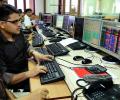
M&M was the biggest gainer in the Sensex chart, rising 6.51 per cent, followed by NTPC, PowerGrid, SBI, HDFC Bank, Asian Paints and Wipro. In contrast, Axis Bank, ITC, HUL, Nestle India and Sun Pharma were among the laggards.
Global fund managers remain bullish on the Japanese stock markets, which is now their most preferred destination in the Asian region. Both Morgan Stanley and Jefferies in their recent reports, have cited their preference for the Land Of The Rising Sun, which is fast becoming the land of the rising equities, too.

The survey noted that advertising campaigns supported the increase in new work growth in the sector amid competitive pressures.

The Nikkei India Services PMI posted above the critical 50.0 level, which separates growth from contraction, for the fourth month running in May.
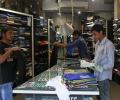
The improvement in business conditions promoted job creation, while confidence towards the year-ahead outlook for activity was at a four-month high during March.

Selling in index heavyweights, including Infosys, TCS, ICICI Bank and Reliance Industries, dragged the benchmark indices into the negative for the second straight session, analysts said. Among the Sensex shares, Asian Paints fell the most by 3.9 per cent as analysts expressed concerns over rising competition in the domestic paints market following the entry of Aditya Birla group company Grasim Industries into the paints segment. IT shares Infosys, TCS, HCL Tech, Wipro and Tech Mahindra continued to slide amid inflation concerns in the US market.

In the Sensex pack, HCLTech rose the maximum by 3.12 per cent, followed by ITC which gained 2.73 per cent and M&M went up 2.61 per cent. TCS climbed 2.44 per cent. Tech Mahindra, Wipro, L&T and Maruti were among the other major gainers.

A higher-than-expected consumer price inflation (CPI) print for March in the US has dashed hopes of an interest rate cut by the US Federal Reserve (US Fed) in June. Analysts now expect the US central bank to start cutting rates in September, provided inflation remains in check and oil prices remain supportive. The markets, analysts believe, partially factored in this possibility.
Equity benchmark Nifty scaled the psychological milestone of 21,000 in afternoon trade on Friday, and the Sensex touched its all-time intraday high of 69,888.33 after the central bank's decision to keep policy rates unchanged in line with market expectations. The 50-share benchmark index opened on a bullish note, after taking a breather on Thursday, and rose to 21,006.10. As many as 25 stocks were trading in the green, and 24 stocks defied the broader market and were trading in the negative territory.

On the job front, Indian service providers continued to add to their payrolls and the sector witnessed the second-strongest increase in employment since March 2011.

The seasonally adjusted Nikkei India Services Business Activity Index fell to 50.2 in May, from 51.0 in April, pointing to the slowest growth rate in the current 12-month stretch of expansion.
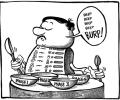
However, predictions that economic conditions will normalise after the elections underpinned optimism regarding the outlook and supported a stronger upturn in employment.

On the employment front, services employment was unchanged in April.

Major laggards among Sensex constituents included Bharti Airtel, Hindustan Unilever, Tata Steel and ITC. Power Grid, UltraTech Cement, NTPC and Titan emerged as winners.

Gains in IndusInd Bank, HCL Tech, TCS, Tech Mahindra, NTPC, ITC, JSW Steel and Tata Steel helped the barometer scale a fresh high. Axis Bank fell the most by 1.26 per cent, M&M by 0.99 per cent and Hindustan Unilever by 0.67 per cent. Maruti, Bajaj Finserv, Bharti Airtel and HDFC Bank and Infosys also declined.

Among major Sensex movers, ITC rose the most by 1.70 per cent, Wipro by 1.43 per cent, Tech Mahindra by 1.36 per cent and Nestle India by 1.27 per cent. Other gainers included HCL Tech, Asian Paints and Reliance. On the other hand, ICICI Bank, NTPC, UltraTech Cement and Tata Steel traded with a loss of up to 0.82 per cent.

An improvement in political relations, anchored in a restoration of peace and tranquillity at the border, could open up opportunities for expanded economic and commercial relations between them, suggests former foreign secretary Ambassador Shyam Saran.
Business confidence remained positive in August and was driven by upbeat forecasts of sales, an expected improvement in demand and promotional activities

ICICI Bank, Axis Bank, Infosys, M&M, Tech Mahindra, Tata Steel, SBI and Maruti were also among the gainers. On the other hand, IndusInd, TCS, Titan and Asian Paints declined.

India is sceptical that Tesla might import into the country cars made in China. Tesla executives were in India last month and appear to have proposed a factory in the country. But do not be surprised if that does not happen in a hurry.

On Pakistan, the publication quoted him as saying that India wants "normal and neighborly relations."

While manufacturing firms cut jobs for the first time in 20 months to sharply reduce costs, services providers continued their hiring spree.

The services sector had slipped into contraction in July as confusion caused by the GST rollout triggered a dip in new business orders.

Sluggish rise in new business inflows and a cautious approach to costs reportedly led Indian manufacturers to shed jobs in September.

A reading below 50 means contraction in the sector.

'We expect the Reserve Bank of India to deliver a 25 bps rate cut in April to support growth.'

TCS was the top gainer in the Sensex pack, rising around 2 per cent, followed by ONGC, SBI, L&T, Infosys, HCL Tech, ICICI Bank and Axis Bank. The broader NSE Nifty surged hit a record high of 14,109.40.

Asian Paints dropped the most by 1.33 per cent. IndusInd bank fell 1.2 per cent, Axis Bank by 1.19 per cent, SBI by 1.12 per cent, Bajaj Finance by 1.07 per cent, Nestle by 1.04 per cent, and TCS by 0.97 per cent. Hindustan Unilever, Reliance Industries, Power Grid and Kotak Bank also retreated. Maruti Suzuki was the lead gainer, rising by 2.22 per cent.
The Nikkei India Services Purchasing Managers' Index, which tracks services sector companies on a monthly basis, stood at 52 in September, down from August's 43-month high of 54.7, pointing to a slower and moderate rate of expansion.
With factory production, activities across the private sector saw the biggest drop in over three years

The Nikkei India Services Purchasing Managers' Index, which tracks the services sector firms on a monthly basis, stood at 50.3 in February, up from 48.7 registered in January.

A reading below 50 means contraction in the sector.
Currency scarcity weighed on manufacturing performance where growth of new work flows slowed
M&M was the biggest loser in the Sensex chart, falling 6.39 per cent, followed by Tech Mahindra, Nestle India, Bajaj Finance, Axis Bank, ITC, JSW Steel, HDFC Bank and RIL. On the other hand, Sun Pharma, Tata Motors, Bharti Airtel, L&T and Infosys were among the winners, rising up to 2.10 per cent.
Regarding employment, the manufacturing sector hiring remained broadly unchanged.

From The New York Times to BBC and The Guardian to The Washington Post, the historic event in India's space programme on Wednesday made headlines across the globe.

Among the Sensex stocks, Larsen & Toubro rose the most by 3.96 per cent after the company announced a major project win in the Middle East. HDFC, HDFC Bank, Sun Pharma, ITC, HUL, Titan, TCS, HCL Tech, Asian Paints, Bajaj Finance, Infosys and Tata Steel were among the major gainers.
A reading above 50 means the sector is expanding, while a reading below 50 means contraction.

For women, it is important to build an emergency fund and a financial independence fund independent of the couple's joint goals and plans.
 © 2026 Rediff.com - Advertise with us - Disclaimer - Privacy Policy - Sitemap - Feedback - About us - Terms of use - Grievances